
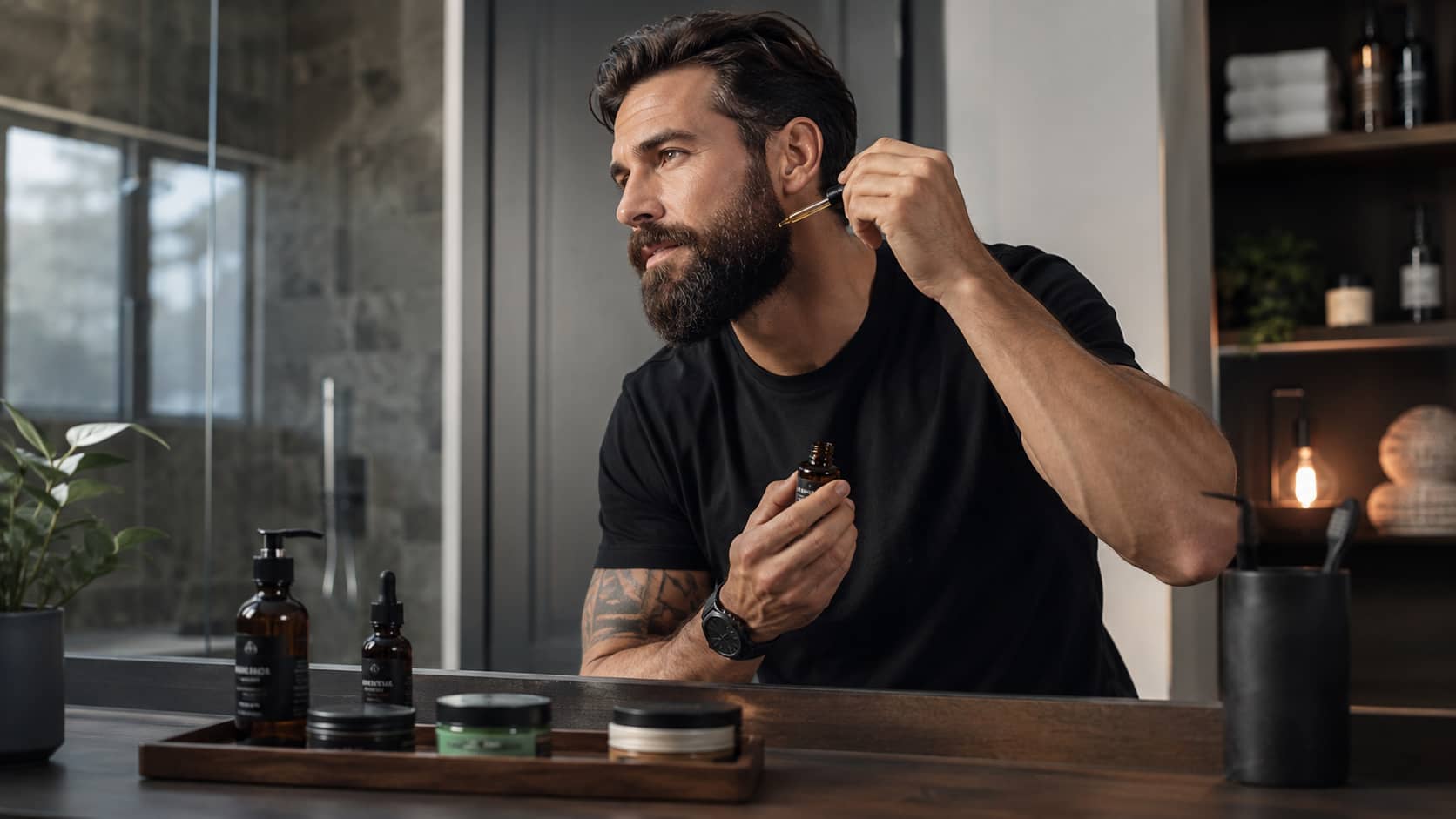
Beard products are often presented as a sequence every man should follow. In reality, beard oil, balm, and facial moisturiser solve overlapping but different problems. You may need one, two, or none of them depending on beard length, skin type, climate, and styling goals.
The first priority is the skin beneath the beard. Dryness, irritation, and blocked follicles do not disappear simply because the hair looks glossy.
Start with cleansing and the skin underneath
Wash the beard and face with a gentle cleanser. Very strong soap can strip oil and increase tightness or flaking. Rinse thoroughly and pat dry, leaving the hair slightly damp before applying a conditioning product.
Use fingertips to reach the skin. Product left only on the outer hair may improve appearance but does little for itch beneath a dense beard.
What beard oil actually does
Beard oil is a mixture of carrier oils, sometimes with fragrance. It reduces friction, adds shine, and can soften short to medium facial hair. A small amount may also reduce the dry feeling of skin beneath the beard.
Oil does not add moisture in the same way as a water-based moisturiser. It helps reduce water loss and improves lubrication. Apply it after washing, when the hair and skin are slightly damp.
When beard oil becomes too much
Men with oily or acne-prone skin may find heavy application greasy. Begin with one or two drops, distribute them through the hands, and massage into the beard. Add more only if the hair still feels rough.
Choose fragrance-free products if scent causes irritation. “Natural” does not guarantee that an essential oil is gentle. Stop using any product that causes persistent redness, burning, or breakouts.
What beard balm adds
Balm usually combines oils with waxes or butters. It provides more control than oil, making it useful for longer beards, loose hairs, and dry conditions. The wax creates a light coating that helps shape the beard.
Balm can feel heavy on short facial hair. It is a styling and conditioning product, not a medical treatment. Warm a small amount between the fingers and work it through from the roots outward.
Facial moisturiser serves a different role
A moisturiser contains water-binding and barrier-supporting ingredients designed for skin. It is often the best first choice for dryness under a short beard or stubble. Lightweight lotions suit oily skin, while creams can help dry areas.
The American Academy of Dermatology’s healthy beard advice recommends applying moisturiser, beard conditioner, or beard oil after washing and massaging it through to the skin.
How to choose between the three
For stubble or a very short beard, start with facial moisturiser. For a medium beard that feels rough but does not need shape, try a small amount of oil. For a longer beard requiring control, balm may be more practical.
If the skin is dry and the beard is long, use moisturiser on the skin and a small amount of oil or balm on the hair. Avoid layering large quantities of all three.
Combing changes how products perform
A wide-tooth comb or beard brush distributes product and helps reveal tangles. Comb gently after application rather than pulling through dry knots. Clean tools regularly because they collect oil, skin, and product.
Over-brushing can create breakage and irritation. One or two controlled passes are usually enough for daily grooming.
Season and environment matter
Cold air and indoor heating can increase dryness, making balm or cream more useful. In humid weather, lighter oil or moisturiser may be sufficient. Swimming in salt water or chlorine may require rinsing and reconditioning.
Adjust quantity before changing the product. Many products seem unsuitable because too much is applied.
Do not confuse flakes with simple dryness
White flakes can come from dry skin, product build-up, or conditions such as seborrheic dermatitis. Persistent redness, thick scale, sores, or severe itching should be assessed by a clinician.
Washing more aggressively and adding heavy oil can worsen some problems. Treat the cause rather than covering flakes with shine.
A minimal beard routine
Clean gently, dry without rubbing, apply one suitable conditioning product, comb, and trim the outline. The shaving guidance in the upcoming routine builds on the same principle: reduce friction and avoid unnecessary passes.
You do not need a branded system. Choose the smallest combination that keeps the skin comfortable and the beard manageable. Good grooming should reduce maintenance, not create another complicated obligation.
Read the ingredient list with a clear purpose
Do not assume a longer ingredient list means better performance. For sensitive skin, a simple fragrance-free product may be easier to tolerate. If you are prone to acne, look for a light texture and introduce it on a small area before covering the full beard zone.
Products can also change with time. Discard anything that develops an unusual smell, colour, texture, or separation that does not resolve according to the label.