
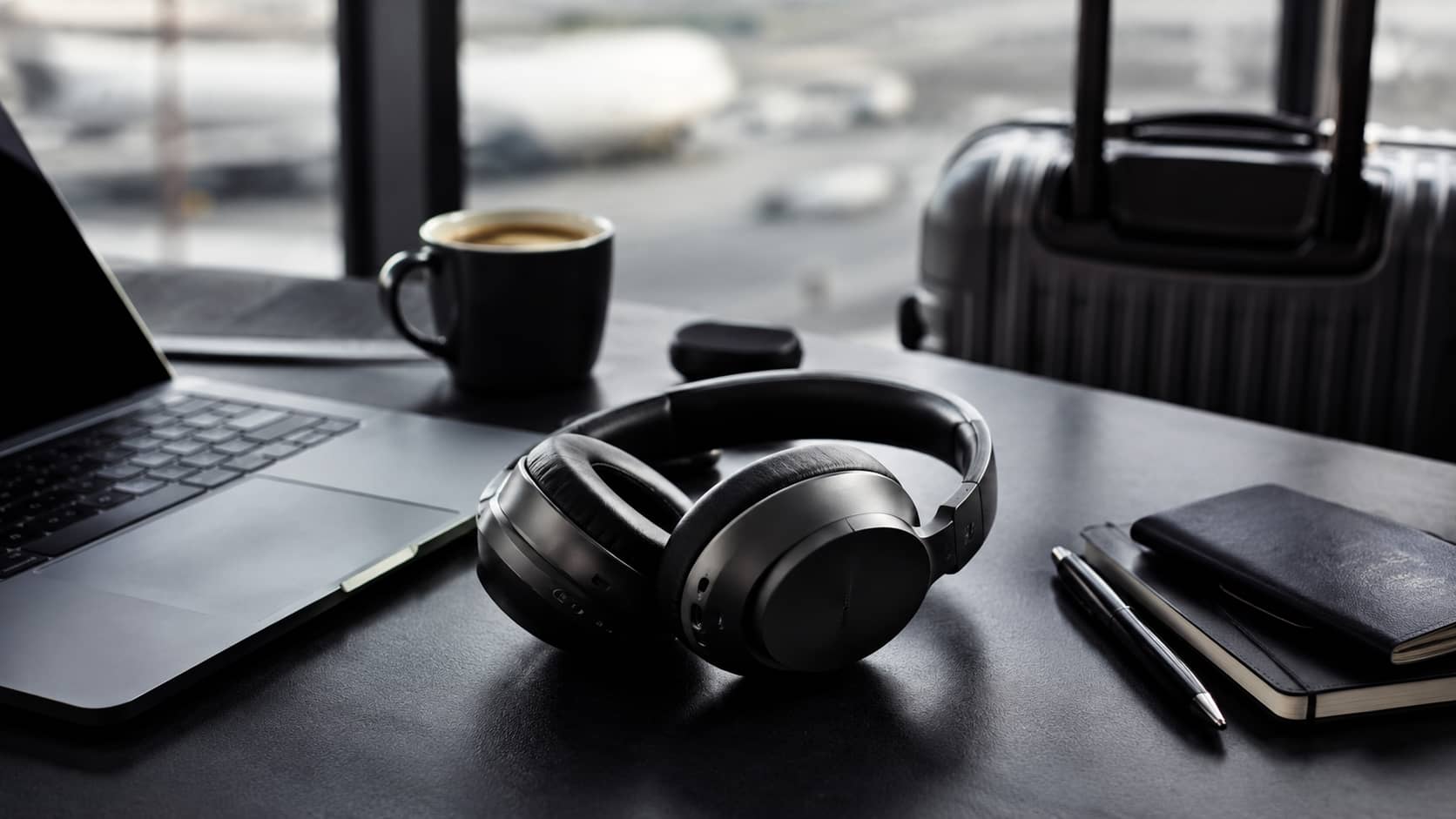
Headphone comparisons often focus on sound signatures, codecs, and feature lists. Those details matter, but a pair used for commuting and work succeeds or fails through comfort, microphone quality, noise control, reliability, and how easily it moves between devices.
The best choice is not automatically the model with the strongest noise cancellation or the highest price. Start by identifying the hours and environments in which you will actually wear it.
Decide between in-ear and over-ear
In-ear headphones are compact, easy to carry, and convenient for short commutes. A good seal can block substantial external noise. The disadvantages are ear fatigue, hygiene, and the risk that one small earpiece is lost.
Over-ear headphones distribute pressure around the ear and often provide longer battery life and stronger active noise cancellation. They are bulkier, warmer in summer, and less convenient when you need to remove them frequently. Glasses can also affect the seal and comfort.
Comfort cannot be judged from specifications
Weight matters, but clamping pressure, pad depth, headband shape, and heat build-up matter just as much. A light headphone with shallow pads can become painful faster than a heavier model that distributes pressure well.
When possible, wear the headphones for at least 20 minutes before deciding. Pay attention to the top of the head, jaw, and area around the glasses arms. For in-ear models, test multiple tip sizes. The largest tip is not always the best seal.
Noise cancellation and isolation are different
Passive isolation comes from the physical seal. Active noise cancellation uses microphones and processing to reduce consistent low-frequency noise such as engines and air-conditioning systems. It is less effective against sudden nearby voices, alarms, and irregular sounds.
For flights and trains, strong active cancellation can reduce the temptation to raise volume. For an office, a natural transparency mode may matter more because you need to hear colleagues. Test whether the mode amplifies keyboard sounds or creates an artificial hiss.
Protect hearing instead of competing with noise
The World Health Organization’s safe-listening guidance explains that risk depends on volume, duration, and frequency of exposure. It recommends keeping device volume below about 60 percent of maximum and using well-fitted noise-cancelling headphones to reduce the need for higher volume in noisy settings.
Use built-in exposure warnings where available. Persistent ringing, muffled hearing, or difficulty following conversation deserves professional assessment. Noise cancellation protects only if it allows you to listen more quietly.
Microphone performance deserves its own test
A microphone that sounds clear in a quiet room may fail beside traffic or in a shared office. Look for call samples recorded in realistic environments rather than relying on the number of microphones listed.
For frequent professional calls, a boom microphone or dedicated USB headset may still outperform fashionable wireless headphones. You can use one set for travel and a simpler wired or USB model at the desk if calls are critical.
Check connection behaviour, not only Bluetooth version
Multipoint connection allows many headphones to stay connected to two devices, but implementation varies. Some switch quickly from laptop audio to a phone call; others hesitate or disconnect. Check whether the controls, microphone, and preferred codec work on your operating systems.
A wired option is useful on aircraft entertainment systems and when the battery is empty. Some wireless headphones accept a cable but disable the microphone or active cancellation in wired mode, so confirm the behaviour before buying.
Battery life should match your worst normal day
Choose enough battery for a long travel day plus a margin. Advertised figures are usually measured under specific conditions, and high volume, calls, cold weather, and active noise cancellation can reduce runtime.
Fast charging can be more useful than a very large total figure. Ten minutes of charging that provides several hours of use can rescue a commute. Also check whether the battery is replaceable or whether the manufacturer offers repair support.
Controls should work without visual attention
Physical buttons are easier to operate with gloves and less likely to trigger accidentally. Touch controls can be convenient but may react to rain, hood fabric, or adjustments. Voice prompts should be clear without interrupting audio for too long.
Make sure you can pause, change volume, answer calls, and activate transparency without opening an app. Core functions should remain available after software support ends.
Buy for your priority, then accept the trade-off
Frequent travellers may prioritise cancellation, comfort, and folding design. Remote workers may care more about microphone quality and multipoint stability. Runners need secure fit and water resistance rather than maximum isolation.
No model leads every category. Write down the three qualities you will notice every day and choose the product that performs those well. A balanced, comfortable headphone used at safe volume is more valuable than a technically impressive model you avoid wearing.