
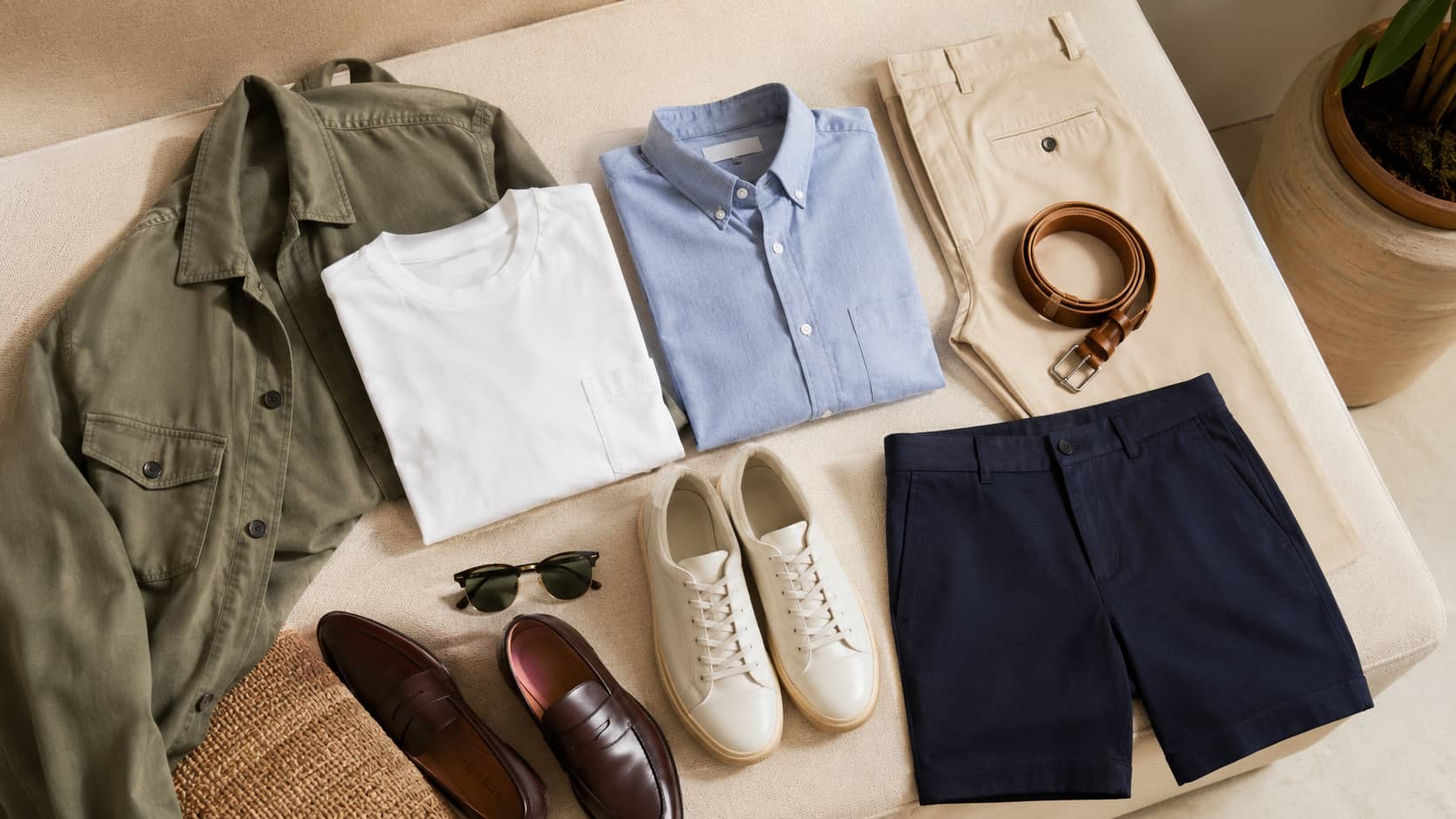
A summer capsule wardrobe is a small group of clothes that work together repeatedly without making every outfit look identical. The point is not to reduce your wardrobe to an arbitrary number. It is to remove the daily friction caused by owning many pieces that do not fit, do not match, or only work for one narrow occasion.
A useful capsule should cover the situations you actually face: work, weekends, evenings, travel, and unusually hot days. It should also suit your climate. Someone spending summer in a humid coastal city needs different fabrics from someone dealing with cool mornings and dry afternoons.
Start with your real summer schedule
Before buying anything, list the places you regularly go during a typical two-week period. Include your workplace dress code, casual social plans, exercise, family events, and any formal occasions. This prevents a common mistake: building a wardrobe for an imagined lifestyle rather than the one you live.
If you work from home and attend one smart dinner each week, you probably need more polished casual clothing than formal office wear. If you commute in heat but spend the day in air conditioning, light layers matter more than simply choosing the thinnest possible garments.
Choose a tight but practical colour range
A capsule becomes easier when most items share a compatible colour family. Navy, off-white, olive, light blue, stone, charcoal, and brown combine well without looking like a uniform. You do not need to avoid colour. One muted red shirt, a green overshirt, or a patterned short-sleeve shirt can add interest while the rest of the wardrobe remains easy to coordinate.
Use dark or medium colours for trousers and shorts that will be worn often. Lighter colours are useful in summer, but they show marks quickly and may need more careful laundering. A practical wardrobe balances visual freshness with the reality of commuting, sitting outdoors, and eating on the move.
Build around eight dependable foundations
A strong starting group is two plain T-shirts, two casual shirts, one lightweight knit or polo, two pairs of trousers, and two pairs of shorts. This is not a strict formula. It is a way to make sure the wardrobe has enough tops and bottoms to create several combinations before laundry becomes urgent.
For T-shirts, prioritise a neckline that sits flat, sleeves that end around the middle of the upper arm, and fabric that is not transparent. For shirts, one Oxford or poplin style can cover smarter situations, while linen or a linen blend handles heat more comfortably. Trousers in lightweight cotton, tropical wool, or a breathable blend can look structured without feeling heavy.
Fabric matters more than summer branding
Retailers often label garments as summer pieces even when the fabric is dense, poorly ventilated, or mostly synthetic. Check the composition and feel the cloth. Linen is breathable and dries relatively quickly, although it wrinkles. Lightweight cotton is comfortable but can hold moisture. Wool may sound unsuitable, yet tropical-weight wool is designed with an open weave that can work well in warm professional settings.
Synthetic fibres are not automatically bad. A small percentage of elastane can improve movement, and technical fabrics can be useful for travel. The issue is whether the material serves a purpose. Shiny polyester trousers that trap heat are a poor choice simply because they are marketed as lightweight.
Limit shoes to roles, not categories
Three pairs cover most summer needs: a clean casual shoe, a smarter shoe, and a practical warm-weather option. The casual pair could be leather or suede sneakers. The smarter option might be loafers or an unstructured derby. Sandals or durable slip-ons can handle holidays, beaches, and relaxed weekends.
Avoid buying several shoes that perform the same role. Five similar white sneakers do not create five different wardrobes. One comfortable, well-maintained pair is more useful than several pairs chosen mainly because they were discounted.
Use layers that solve actual problems
Summer still includes cool evenings, aggressive air conditioning, wind, and rain. A lightweight overshirt, unlined jacket, or fine cotton knit can extend the wardrobe without adding bulk. It should fit over a T-shirt or shirt without pulling across the shoulders.
Avoid jackets with heavy lining unless you need formal structure. An unstructured blazer in breathable fabric can cover dinners and informal work events, while a simple overshirt is easier for daily use. One good layer is more valuable than several decorative jackets that stay in the wardrobe.
Test combinations before purchasing more
Lay the clothes on a bed or use a simple photo grid. Every new top should work with at least two bottoms, and every bottom should work with several tops. If an item only creates one acceptable outfit, it is not necessarily wrong, but it should earn that limited role through frequent use or a specific need.
Wear the capsule for two weeks before filling perceived gaps. You may find that you need another shirt because of laundry timing, not another pair of shorts. You may also notice that one pair of trousers is technically versatile but uncomfortable in heat. Real use reveals more than a shopping list.
Keep the wardrobe small by maintaining it
Follow care labels, air garments between wears, remove stains early, and repair loose buttons before they become lost. The US Environmental Protection Agency includes maintaining and repairing clothing among practical ways to reduce waste, a principle that also reduces replacement spending. A smaller wardrobe only works when its key pieces remain wearable.
The best summer capsule is not the one with the fewest items. It is the one that lets you dress appropriately with little effort. Start with what you own, remove pieces that consistently fail, and add only garments that solve a clearly defined problem.