
Sitting does not permanently “switch off” muscles or ruin posture, but long periods in one position can make the hips, upper back, shoulders, and ankles feel stiff. The most useful response is not a perfect posture held all day. It is regular movement, a workable desk setup, and strength through comfortable ranges.
This routine takes about ten minutes and can be repeated most days. It should feel controlled, not painful. Persistent numbness, weakness, radiating pain, or symptoms after an injury require professional assessment.
First, change position more often
A mobility routine cannot compensate for eight uninterrupted hours at a desk. Stand for calls, walk to refill water, and change sitting position. Small movement breaks are easier to maintain than one long corrective session.
Set a reminder every 45 to 60 minutes until the habit becomes automatic. The goal is not to perform a full routine each time. Two minutes of walking and shoulder movement can be enough.
Exercise one: controlled neck turns
Sit or stand tall without forcing the chest upward. Turn the head slowly to one side until you feel a mild stretch, return to centre, and repeat on the other side. Perform five controlled repetitions per side.
Do not pull the head with your hand or circle the neck rapidly. The movement should remain comfortable and smooth.
Exercise two: upper-back rotation
Sit near the front of a chair with feet flat. Cross the arms over the chest and rotate the ribcage to one side while keeping the hips mostly forward. Pause briefly and alternate for six repetitions per side.
Think about turning through the upper back rather than twisting aggressively at the lower spine. Breathe out during the rotation.
Exercise three: doorway chest stretch
Place the forearm against a doorway with the elbow below shoulder height. Step forward gently until the front of the chest and shoulder stretches. Hold for 20 to 30 seconds per side.
Lower the arm if the shoulder feels pinched. A stretch should create tension in muscle, not sharp joint pain.
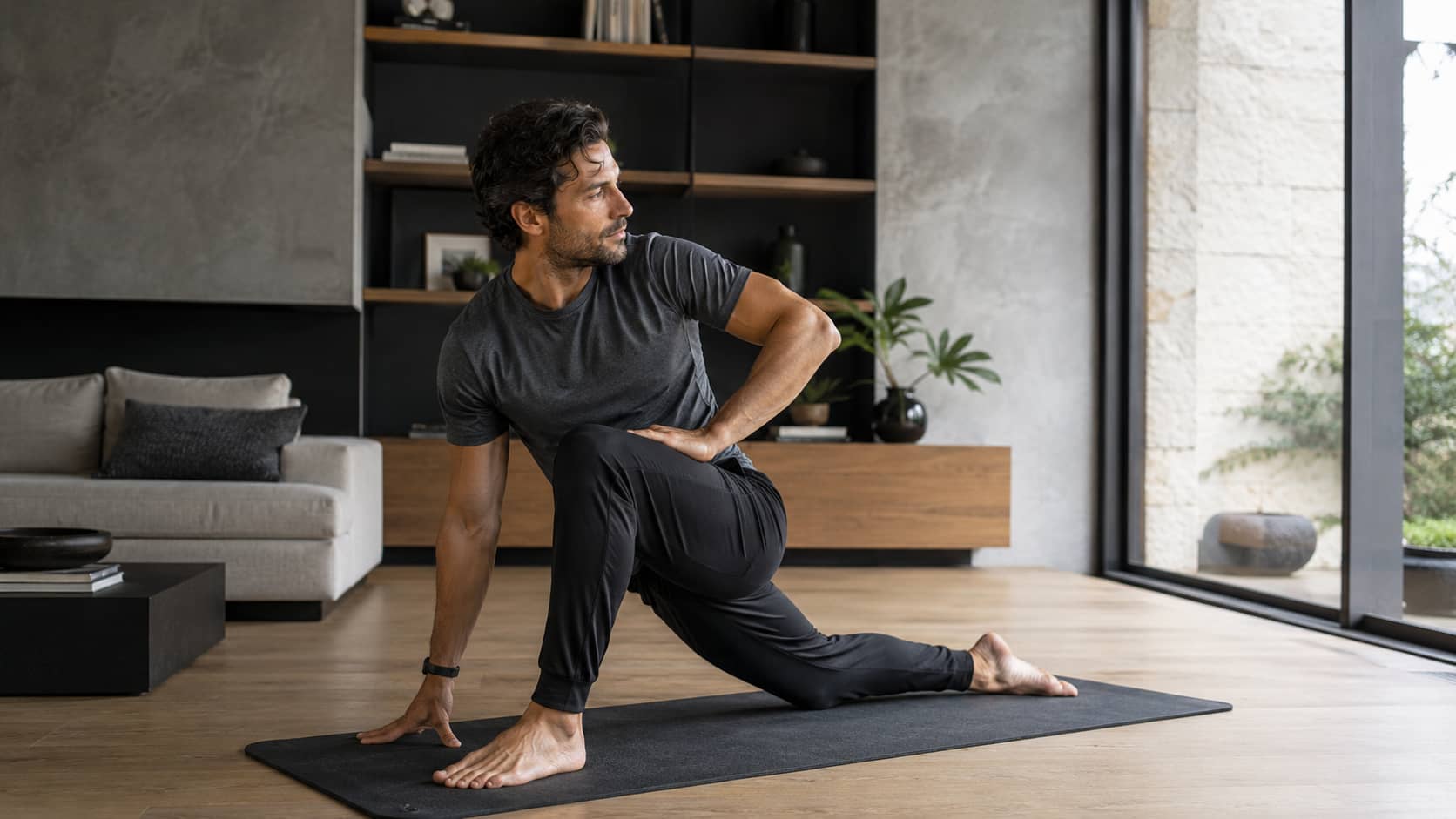
Exercise four: half-kneeling hip movement
Kneel on one knee with the other foot forward. Tuck the pelvis slightly and move the body forward until you feel the front of the rear hip. Hold for 20 seconds, then make five small controlled forward-and-back movements.
Use a cushion under the knee. Keep the torso upright rather than arching the lower back to create a larger-looking range.
Exercise five: supported squat
Hold a sturdy desk, door frame, or post and sit into a comfortable squat. Keep the heels supported, using a small book beneath them if needed. Hold for 20 to 30 seconds while breathing normally.
This position moves the hips, knees, and ankles together. Stay above any range that causes knee or back pain.
Exercise six: ankle rocks
Stand facing a wall with one foot forward. Keep the heel down and move the knee toward the wall over the toes. Perform eight slow repetitions per side.
Move the foot closer if the heel lifts. Better ankle movement can make walking, stairs, squats, and lunges feel easier.
Exercise seven: wall slides
Stand with the back near a wall and place forearms against it if comfortable. Slide the arms upward without shrugging, then lower them slowly. Perform six to ten repetitions.
Do not force the lower back flat or chase a range the shoulders do not have. The movement is a controlled reach, not a flexibility test.
Add strength to make mobility useful
Range becomes more durable when you can control it. Rows, split squats, hip hinges, carries, and overhead pressing can support desk workers when performed appropriately. The two-day strength plan provides a simple whole-body structure.
Mobility before strength can help you reach comfortable positions, but endless stretching is not required. A few targeted movements followed by progressive exercise is usually more practical.
Improve the workstation at the same time
OSHA’s computer workstation guidance recommends relaxed shoulders, supported feet, and elbows close to the body. There is no single correct arrangement for everyone, but the screen, chair, keyboard, and pointing device should reduce unnecessary reach.
Bring the monitor high enough that you are not repeatedly bending the neck, and place commonly used items within easy reach. An adjustable setup is useful because it allows variation.
How to use the routine
Perform the full sequence once per day or divide it into smaller breaks. Choose four movements if ten minutes is unrealistic. Consistency matters more than completing every exercise perfectly.
Track one practical outcome: less stiffness after work, easier squats, or fewer headaches associated with a fixed position. If nothing changes after several weeks, reassess the desk, sleep, training, and whether a clinician should evaluate the symptoms.
Movement is the main posture strategy
Posture varies between people and tasks. The best position is often the next comfortable one. Use the routine to create options, then change position throughout the day.
A body that moves regularly and is trained through useful ranges needs less micromanagement than one forced into a supposedly perfect pose.