
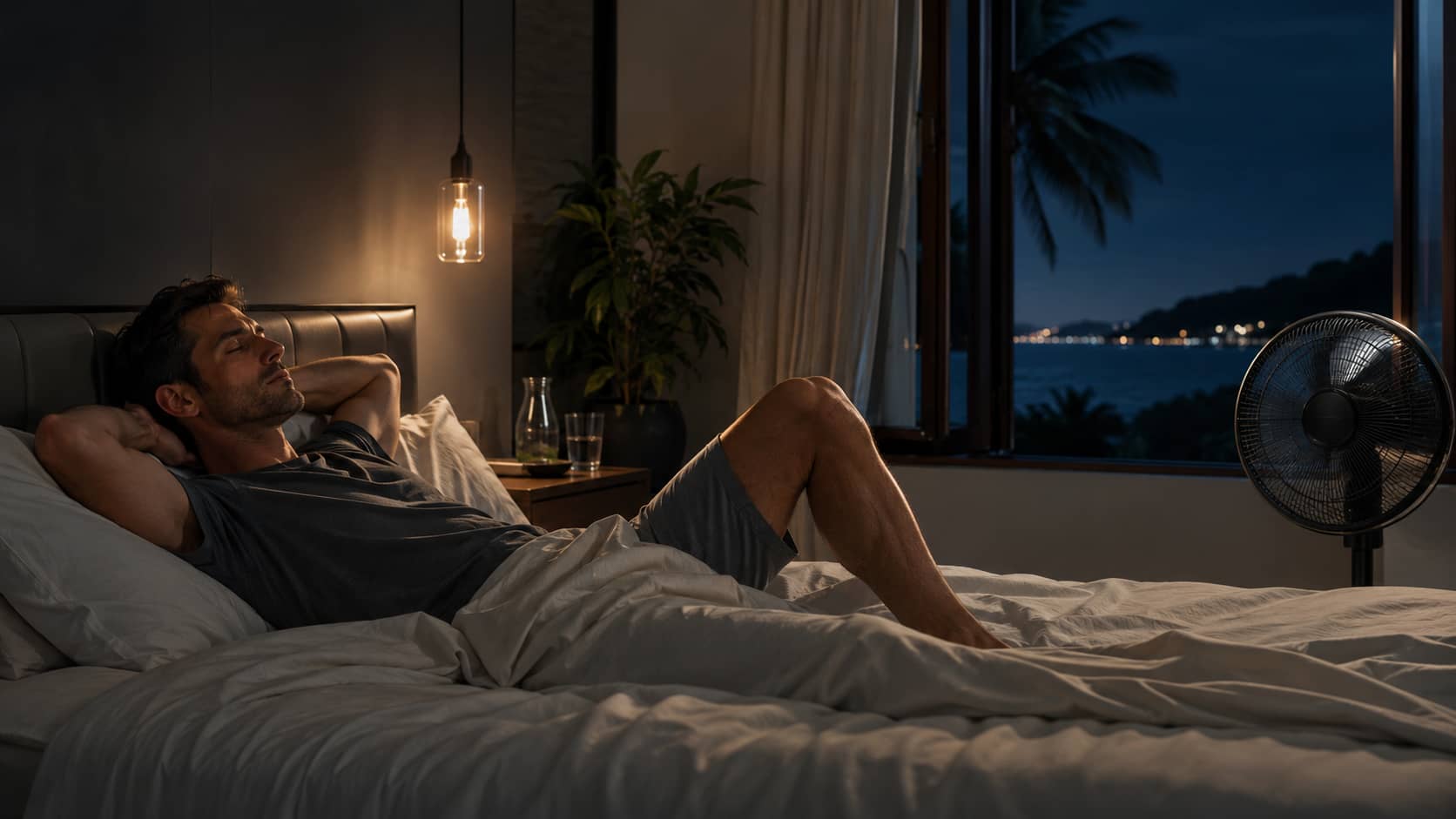
Hot nights can make sleep feel shallow and fragmented even when you spend enough time in bed. The body normally loses heat as part of the process of falling asleep. A warm room, trapped humidity, heavy bedding, and late exercise can interfere with that cooling.
You do not need to turn the bedroom into a refrigerated space. The most effective approach is to reduce heat entering during the day, improve airflow when outside conditions allow, and remove sources of unnecessary warmth around bedtime.
Control the room before evening
Close blinds or curtains on windows receiving direct sun. If outdoor air is hotter than indoor air, keep those windows closed during the hottest hours. Open them when the outside temperature drops, creating cross-ventilation where possible.
The NHS advises closing windows and coverings during hot periods and opening them at night once the external temperature has fallen. A fan can help move air and support evaporation, although it does not lower the room temperature itself.
Choose bedding that releases heat
Use the lightest bedding that still feels comfortable. A breathable cotton or linen sheet is often more useful than a heavy duvet with one leg pushed outside. Remove decorative layers and mattress protectors that trap heat if they are not required.
Dense memory foam can retain warmth. Before replacing a mattress, try a thinner breathable protector, a lighter duvet, and improved room ventilation. Expensive cooling products should be judged by whether they solve a measured problem rather than by their claims.
Cool the body gradually
A lukewarm or cool shower can reduce discomfort, but ice-cold water may feel stimulating and cause the skin vessels to constrict. Dry lightly and allow a small amount of moisture to evaporate before bed.
Place a cool pack wrapped in cloth near the feet or neck for short periods. Do not apply frozen items directly to skin. A damp cloth can also help, but avoid making the bed wet enough to create discomfort later.
Hydrate earlier, not all at once
Drink regularly through the day. If you wait until bedtime to replace all missed fluid, repeated bathroom trips may interrupt sleep. In very hot weather or after heavy sweating, you may need extra fluid and normal dietary salt according to your health needs.
The NHS heat guidance recommends regular cool drinks and limiting excessive alcohol. Alcohol may make sleep onset feel easier, but the CDC notes that it can contribute to early awakening and disturbed sleep.
Move exercise away from the hottest hours
Regular activity generally supports sleep, but a hard workout close to bed can keep body temperature and alertness elevated. In hot weather, move demanding training to the morning or a cooler early evening period.
The guide to exercising safely in hot weather explains how to adjust intensity and timing. If you must train late, reduce the session, cool down properly, and allow time before getting into bed.
Keep the evening meal practical
A very large or spicy meal can add discomfort on a hot night. Eat earlier when possible and choose a normal balanced meal rather than skipping food entirely. Hunger can disturb sleep just as effectively as overeating.
Limit caffeine according to your sensitivity. Its effect can last for several hours, so an afternoon coffee may matter even if you feel able to fall asleep. Track timing for a week rather than assuming caffeine has no effect because you are used to it.
Reduce heat from devices and lighting
Computers, game consoles, televisions, chargers, and bright lamps add heat. Turn off equipment you are not using and move charging devices away from the bedside. Low-energy lighting produces less heat than older incandescent bulbs.
Electronic screens can also delay the transition into sleep when they keep you engaged. The CDC’s sleep guidance recommends turning off electronic devices at least 30 minutes before bedtime.
Use a repeatable wind-down routine
Keep bedtime and wake time reasonably consistent, even when the night was poor. Dim lights, prepare clothing for the morning, and choose a quiet activity that does not require constant scrolling.
If you cannot sleep after a long period, get up and sit somewhere dim until you feel sleepy rather than becoming frustrated in bed. Avoid checking the clock repeatedly.
Know when heat is a health risk
Hot weather can be dangerous, particularly for older adults, infants, people with chronic conditions, and those taking certain medicines. Headache, nausea, dizziness, confusion, rapid breathing, or unusual weakness can indicate heat illness rather than simple poor sleep.
Seek medical help when symptoms are severe, when cooling does not improve them, or when heatstroke is suspected. Check on vulnerable people living alone during prolonged heat.
A better night begins during the day
The most useful changes are usually simple: block direct sun, ventilate at the right time, use lighter bedding, hydrate steadily, and move hard exercise earlier. Test one or two changes rather than buying a collection of cooling gadgets.
Some hot nights will still be imperfect. The aim is to reduce preventable disruption and protect health until the weather changes.