
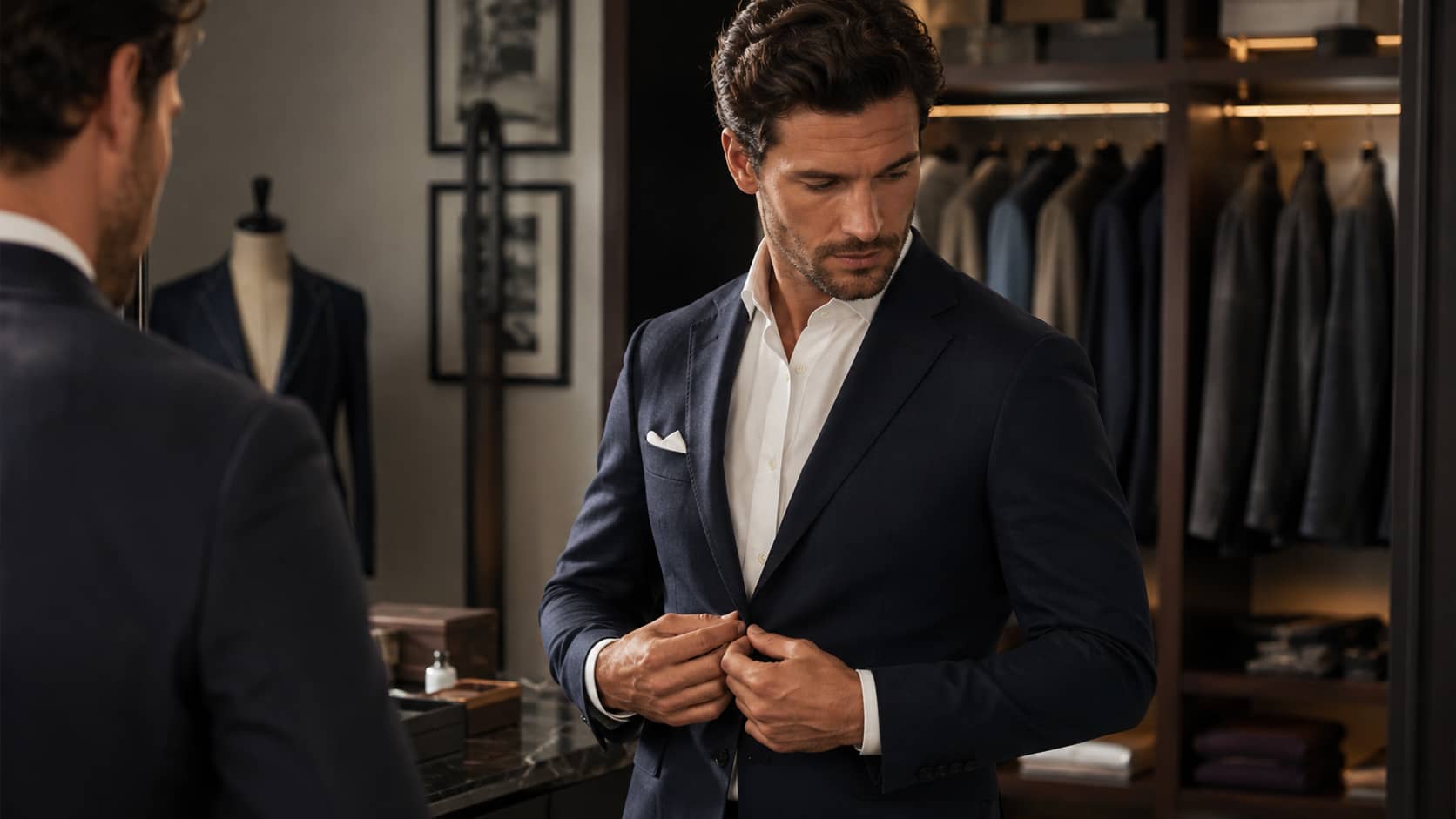
A jacket can be expensive, well made, and still look wrong if the shoulders, chest, length, and sleeves do not suit the wearer. Some details are easy to alter, while others are so structural that buying the correct size from the start is essential.
This guide applies mainly to blazers, sport coats, and tailored casual jackets. Coats and technical outerwear need additional room for layers, but the same principles of balance and movement remain useful.
The shoulders are the non-negotiable area
The shoulder seam should end near the natural edge of your shoulder. Padding may extend the line slightly, but it should look intentional. A visible dent below the sleeve head can indicate that the shoulder is too wide or shaped differently from your body.
If the jacket is too narrow, the upper sleeve may pull and the collar can lift. Shoulder alterations are complex and often not economical. Choose the jacket that fits here before worrying about sleeve length.
Check the collar from behind
The collar should sit against the shirt collar without a large gap. A small roll of fabric below the collar can sometimes be adjusted by a tailor, but severe pulling may signal a mismatch in posture or shoulder slope.
Wear the shirt you normally use. A thick knit changes the result, so do not assess a blazer over an unrealistic base layer.
The chest should close without strain
Button the jacket at the intended fastening point. The fronts should meet cleanly without an X-shaped pull around the button. At the same time, the chest should not collapse into loose folds.
Place a flat hand inside the jacket. Some room is normal, but a fist-sized gap is usually excessive for a tailored fit. Do not size down solely to create a narrow waist if the chest and shoulders then become tight.
Waist suppression should follow your body
A jacket can taper through the waist, but the shape should begin naturally below the chest. Extreme suppression makes the skirt flare and can cause the fronts to cross.
Tailors can often take in or release the waist within the available seam allowance. This is one of the more reasonable alterations, provided the rest of the jacket fits.
Length changes the whole proportion
A traditional blazer generally covers the seat and ends around the middle of the hand when the arms hang naturally. Modern casual jackets may be shorter, but they should not expose the entire seat or make the torso look cut off.
Tall men often need a long size, while shorter men may benefit from a short size rather than simply shortening a regular jacket. Altering length can disturb pocket placement and balance.
Sleeves should reveal a controlled amount of shirt
Jacket sleeves commonly end near the wrist bone, allowing roughly one centimetre of shirt cuff to show. The exact amount is personal, but both sides should be even.
Sleeve shortening is usually straightforward from the cuff when the buttons are decorative. Working buttonholes can make the alteration more expensive and limit the amount available.
Armholes affect comfort more than width alone
Higher armholes that fit correctly allow the arm to move with less distortion of the jacket body. Low, oversized armholes can pull the entire jacket upward when you raise your arms.
You should be able to reach forward, sit, and drive, but a tailored jacket will never move like sportswear. Judge comfort according to the garment’s purpose.
Vents should remain closed when standing
Single or double vents should hang flat rather than spreading open. Open vents can indicate tightness through the seat or hips. A double vent often works well for sitting and provides a clean line around the trousers.
Remember to remove the temporary stitching that keeps vents closed during shipping. The same applies to exterior pockets if you intend to use them, although leaving some pockets sewn can preserve shape.
Look at balance from every angle
The front and back hems should appear level when you stand naturally. A jacket rising at the front may be too tight or too short for the chest. Excess fabric at the back can come from posture or an unsuitable cut.
Take photos from front, side, and back. Mirrors encourage you to twist and change posture, hiding the real fit.
Bring your actual layers to the fitting
Try an autumn jacket over the knit or overshirt you plan to wear. The autumn layering guide explains how middle layers and outerwear should work together. A jacket fitted only over a thin T-shirt may fail in colder weather.
For summer tailoring, use a lighter shirt and check whether the lining and fabric remain comfortable. Seasonal purpose should influence the amount of ease.
Alter the easy details, reject structural problems
Sleeve length and waist shape are common alterations. Jacket length, shoulder width, armhole structure, and major collar issues are more difficult. Ask a tailor for an estimate before assuming every problem can be fixed.
A well-fitting jacket should improve posture visually without forcing you into a pose. The shoulders sit cleanly, the collar remains close, the fronts close without strain, and the length balances your body. When those foundations work, small alterations can produce an excellent result.