
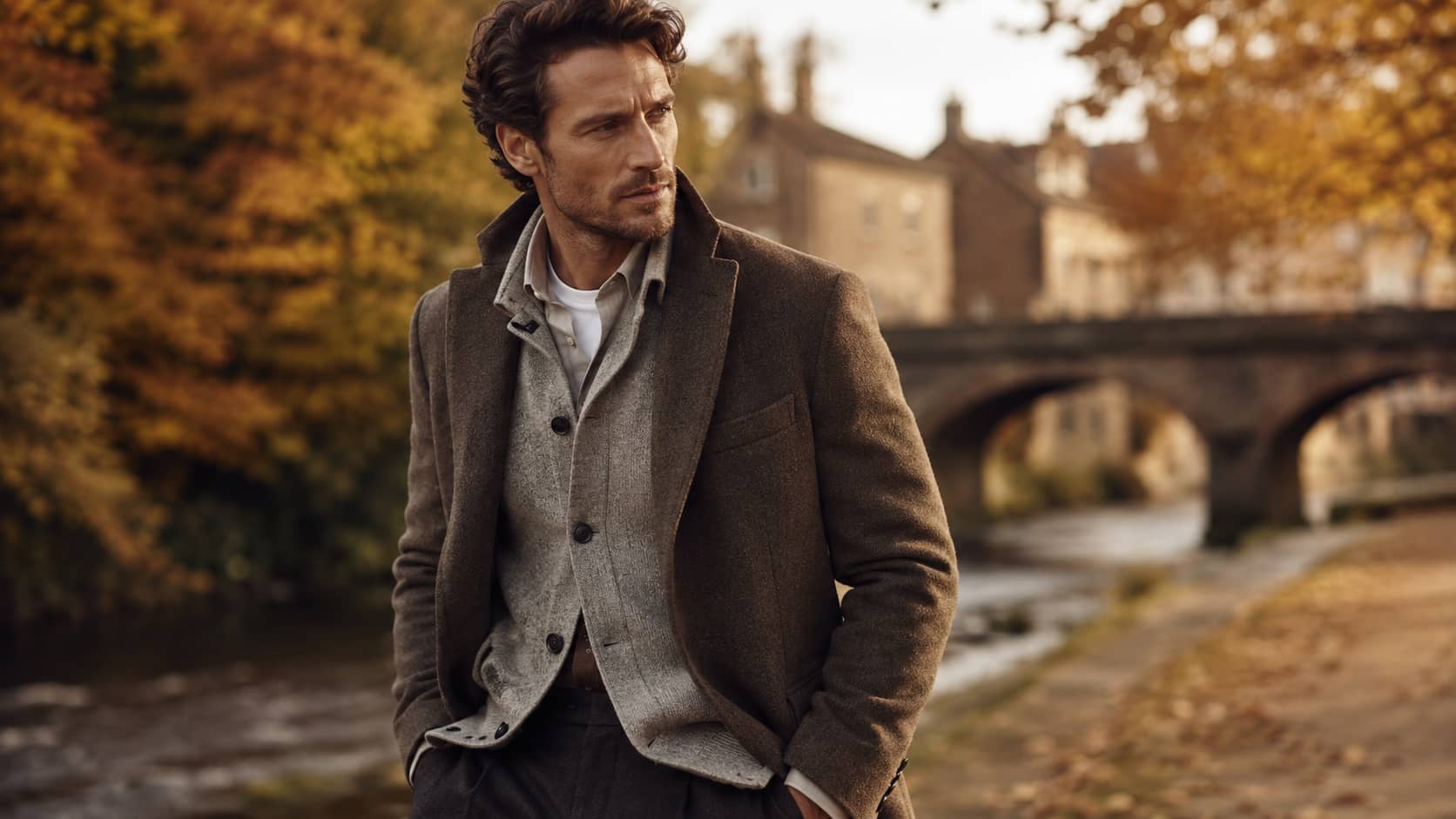
Autumn dressing is difficult because conditions change within the same day. A cold morning can become a warm afternoon, while wind and rain make the temperature feel inconsistent. The solution is not a single heavy coat. It is a set of layers that can be added, removed, and carried without ruining the outfit.
Good layering also extends the usefulness of summer clothes. T-shirts, linen shirts, and lightweight trousers can remain in rotation when they are paired with warmer textures and a weather-resistant outer layer.
Think in three functional layers
The base layer manages comfort against the skin. The middle layer adds warmth. The outer layer controls wind and light rain. Not every outfit needs all three, but the framework helps you identify what is missing.
A cotton T-shirt under a wool overshirt and a light rain jacket creates three adjustable levels. A thick sweater under a lined coat creates fewer options and can become uncomfortable indoors.
Start with breathable base pieces
Use a T-shirt, polo, Oxford shirt, or fine knit as the first visible layer. It should fit close enough to sit cleanly under other garments but not so tightly that it pulls when you move.
Summer shirts can stay useful. A linen shirt from your summer capsule wardrobe works under an overshirt on dry early-autumn days, though a linen-cotton blend may feel more seasonally balanced.
Choose middle layers that open easily
Cardigans, overshirts, chore jackets, and zip knits are easier to regulate than pullovers because they can be opened or removed quickly. They also create visible depth around the collar and chest.
A middle layer should fit under the outer jacket without bunching at the shoulders. Try the two together before buying. A garment that looks perfect alone may be too bulky in the sleeve.
Use texture to create interest
Autumn outfits often rely on muted colours, so texture prevents them from becoming flat. Brushed cotton, corduroy, denim, flannel, suede, and wool can sit together when the colours are controlled.
Avoid combining several heavy textures in the same area. A thick cable knit under a chunky overshirt and padded coat may feel restrictive. Let one piece provide the dominant texture while the others remain quieter.
Build a simple colour system
Navy, charcoal, olive, brown, cream, and burgundy work well in autumn because they combine easily and tolerate repeated wear. You do not need to dress entirely in dark colours. A cream knit or light blue shirt can keep the outfit from looking heavy.
Use one strong colour at a time. An olive jacket, burgundy knit, and bright patterned scarf can compete. A neutral base with one richer accent looks more deliberate.
The outer layer should match the weather problem
A waxed or technical shell handles rain and wind. A wool coat provides warmth and a smarter line but may be less useful in heavy rain. A lightweight insulated jacket works for cold commutes but can look too casual for some offices.
Do not buy the warmest coat available in September. Start with a flexible shell or unlined jacket, then add insulation through middle layers. This approach covers a wider range of temperatures.
Keep lower-body layers simple
Most men do not need multiple visible layers below the waist. Choose trousers in a fabric appropriate to the day: denim, corduroy, heavier chinos, or wool. On colder days, an invisible thermal base layer is more effective than extremely thick trousers.
Ensure the trouser hem works with autumn footwear. Wet fabric pooling over shoes looks untidy and takes longer to dry.
Footwear should tolerate moisture
Autumn shoes need grip and materials that can handle damp conditions. Leather boots, sturdy derbies, and weather-treated sneakers are practical. Suede can work when protected and brushed, but it is not the best choice for every rainy commute.
Rotate shoes so they can dry fully. Use shoe trees for leather footwear and remove surface dirt before it becomes embedded.
Carry removed layers without damaging them
If you know the afternoon will warm up, choose a layer that folds into a bag. Heavy structured jackets are awkward to carry and may spend the day over a chair.
A lightweight tote, backpack, or work bag with spare space supports the system. Layering only works when removing a garment is convenient.
A seven-piece autumn core
A practical foundation could include two base tops, a fine knit, an overshirt, a weather-resistant jacket, dark trousers, and reliable shoes. These pieces create multiple combinations before accessories are added.
Autumn style improves when each layer has a job. Choose pieces that regulate temperature, combine easily, and remain comfortable indoors. The visual result follows from the function.
Review the system after the first cold week
Notice which layer you repeatedly remove, which one never feels warm enough, and where movement becomes restricted. These observations are more useful than buying another seasonal item immediately. Adjust fabric weight or fit only after the wardrobe has been tested across several real days.