
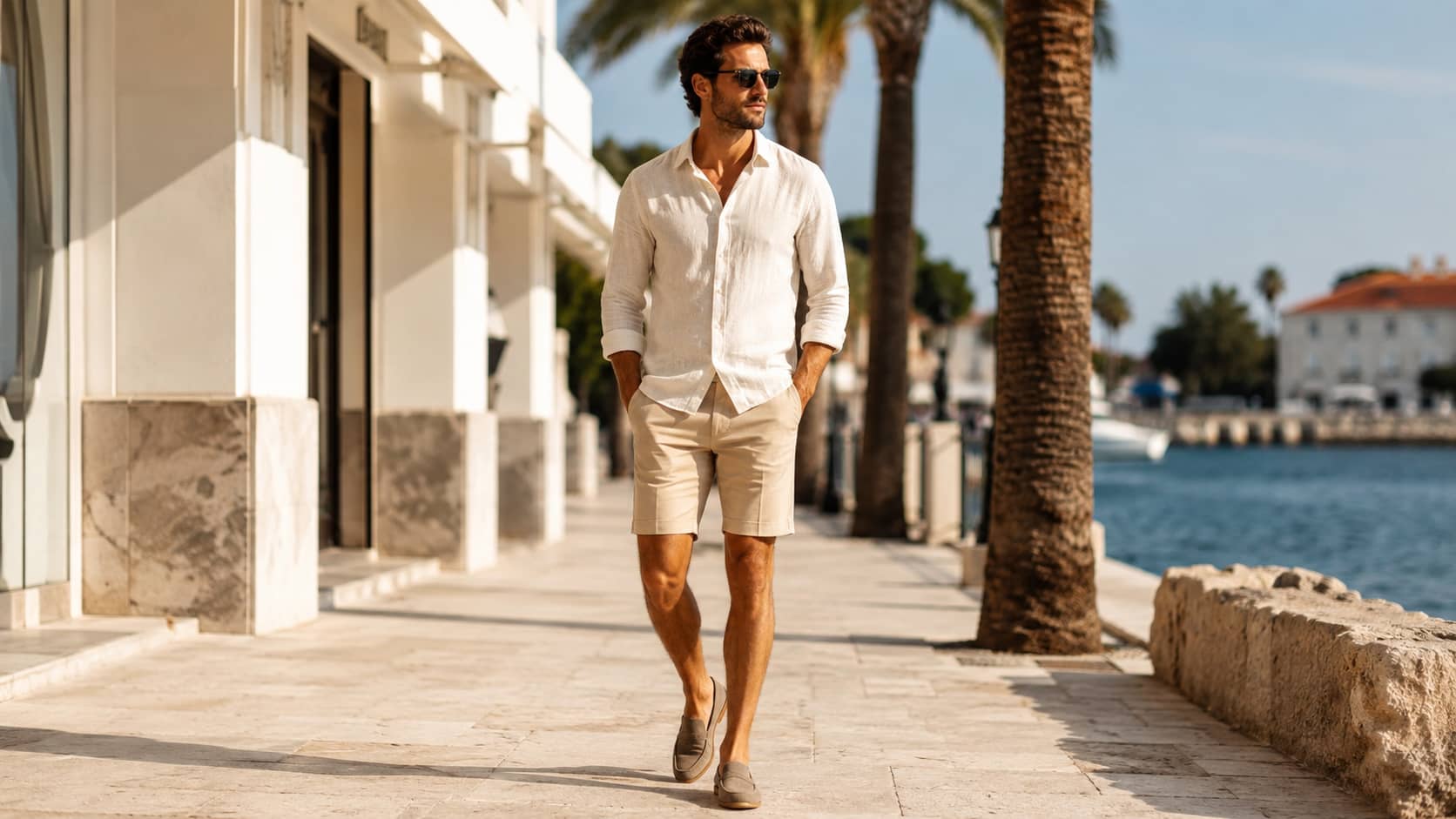
Shorts are simple garments, but poor fit is obvious because the leg opening, hem, waistband, and pocket shape are all visible at once. A good pair should allow movement, stay secure without a tight belt, and match the setting in which it will be worn.
There is no single correct inseam for every man. Height, leg proportion, body shape, activity, and personal style matter. The practical goal is to choose shorts that look intentional rather than as if trousers were cut at a random point.
Begin with the waistband
The waistband should sit where the design intends, usually around the natural waist or slightly below it. You should be able to fasten the shorts without pulling in your stomach, and the fabric should remain smooth rather than forming sharp horizontal lines.
If the waistband slides down during walking, the shorts are too large or the rise is wrong for your body. A belt can refine fit, but it should not be required to prevent the shorts from falling. Drawstring shorts should secure comfortably without creating a bulky knot under a shirt.
Use the seat as the first fit test
Look at the back in a mirror. The fabric should follow the body without stretching across the seat or collapsing into large folds below it. Tightness here pulls the side pockets open and makes the hem rise when you sit.
Too much fabric creates a sagging seat and can make even clean, tailored shorts look like sportswear. Try sitting, climbing a step, and bending to check whether the rise provides enough space without excessive material.
Choose length by proportion and purpose
A hem finishing several centimetres above the knee works for many casual outfits. Shorter lengths can look balanced on men with shorter legs or in relaxed summer settings. A hem close to the knee is more conservative but can visually shorten the leg when the cut is wide.
Avoid judging inseam measurements without considering your height. The same 18 cm inseam looks different on two bodies. Use the position relative to the kneecap as the more useful reference.
The leg opening should create a clean line
Slim shorts should not grip the thigh when standing or sitting. You need enough room for the fabric to fall rather than cling. Very wide openings can make the legs look narrow and the outfit bottom-heavy.
Pinch the fabric at the side of the thigh. A small amount of room is useful, but a large fold may indicate excess width. Athletic legs often need a larger thigh with a controlled taper toward the hem.
Pockets reveal problems quickly
Side pockets should lie flat. If they flare open, the shorts may be too tight through the hips or seat. Heavy phones and wallets distort lightweight shorts, so use a small bag or jacket pocket when practical.
Back pockets should sit level and avoid pulling. Cargo pockets add visual width and weight, which can be useful for practical activities but makes the shorts less versatile for smart-casual outfits.
Match the rise to the shirt
A medium or higher rise works well with tucked shirts because it creates a natural waist and avoids a long exposed torso. Low-rise shorts are usually better with untucked tops, but they can feel restrictive when sitting if the front rise is too short.
If you often wear linen or camp-collar shirts, try the shorts with those garments before buying. The guide to wearing linen shirts neatly explains when a tucked or untucked hem creates the better proportion.
Fabric determines how precise the fit must be
Structured cotton twill and tailored wool blends hold their shape, so poor fit remains visible. Linen and drawstring fabrics tolerate more ease but still need a controlled waistband and seat. Technical stretch fabrics can improve movement, yet too much stretch often encourages buyers to accept a size that is actually too small.
Check opacity in bright light, especially with pale colours. Thin fabric can become transparent when stretched across the thighs or seat.
Different shorts serve different situations
Tailored shorts with a clean waistband, minimal pockets, and a modest hem suit casual dinners and warm offices where shorts are acceptable. Chino shorts are adaptable for daily wear. Drawstring shorts belong in more relaxed settings unless the fabric and cut are unusually refined.
Sports shorts should be judged by movement, ventilation, liner comfort, and storage rather than by rules for casual clothing. Do not expect one pair to perform equally well at the gym, beach, and restaurant.
Alteration is possible, but limited
A tailor can shorten a hem, reduce the waist, and sometimes narrow the leg. Major changes to the rise or seat are rarely economical. Buy for the difficult areas first, then adjust smaller details.
Before removing length, pin the hem and walk around. Shorts often appear shorter in motion and while sitting. Leave enough fabric for a clean hem and future adjustment.
The simplest final check
Wear the shorts with the shoes and shirt you plan to use. Stand naturally, sit, walk, and place normal items in the pockets. If you keep adjusting the waistband or pulling the hem down, the fit is not working.
Well-fitting shorts do not demand attention. They create a clean line, allow movement, and support the rest of the outfit. That makes them a useful extension of the summer capsule wardrobe, rather than a separate collection of warm-weather clothes.