
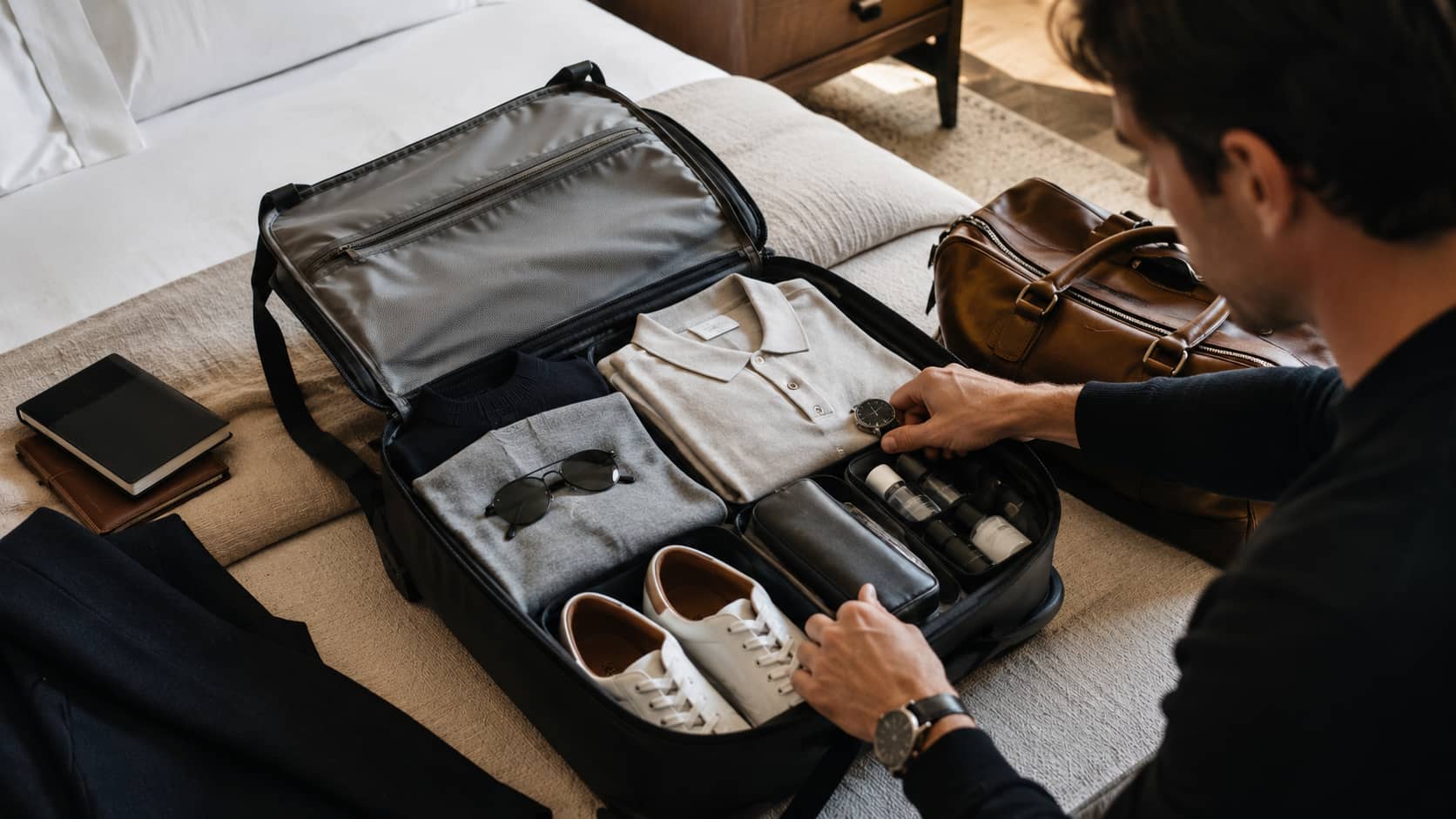
Packing light is less about owning special travel products and more about making decisions before the bag is open. Most overpacking happens because each item is judged individually: this shirt might be useful, those shoes could work, and an extra jacket feels reassuring. The bag becomes full before the outfits have been considered as a system.
A better method starts with the trip schedule, weather, and one realistic backup plan. For two or three nights, a compact bag should cover most trips without forcing you to dress badly or buy forgotten essentials at the destination.
Write the itinerary in clothing terms
List the actual events: travel, two casual days, one dinner, a walk, and perhaps exercise. Then decide what each activity requires. “Nice outfit” is too vague. “Collared shirt, trousers, and clean shoes” is useful because it identifies pieces that can also serve other parts of the trip.
Check the weather close to departure, including rain, evening temperature, and wind. Do not pack for every imaginable event. Pack for the forecast plus one sensible contingency, such as a light waterproof layer or a warmer knit.
Wear the bulkiest items in transit
Travel in your heaviest shoes, longest trousers, and outer layer. This keeps the bag smaller and reduces the risk of crushing structured clothing. The travel outfit should still be comfortable enough for sitting and walking.
Choose layers you can remove rather than one extremely warm item. A T-shirt, overshirt, and lightweight jacket are more adaptable than a thick jumper that only works in one temperature range.
Pack complete combinations, not separate favourites
Every packed top should work with every packed bottom. A simple weekend set might include two T-shirts, one shirt, one spare pair of trousers or shorts, underwear and socks, a light layer, and sleepwear. The exact number depends on climate and activities, but the coordination rule remains useful.
The same logic underpins a men’s summer capsule wardrobe. Neutral foundations make repetition less obvious, while one patterned or coloured piece prevents the outfits from feeling flat.
Use the two-shoe rule
One pair is worn and one pair is packed. For most weekends, the combination should cover walking and the smartest planned event. Clean leather sneakers and loafers are a common pairing, but practical walking shoes and a compact casual shoe may suit an active trip better.
Do not pack shoes “just in case” unless the itinerary genuinely requires them. Shoes consume space, add weight, and often force you to bring extra clothing that matches them.
Reduce toiletries by function
Take the products you will use, not miniature versions of your entire bathroom. A small cleanser, moisturiser, sunscreen, deodorant, toothbrush, toothpaste, and shaving item cover many trips. Hotels may provide basic soap and shampoo, but check rather than assume.
Place liquids in a sealed bag and keep them accessible if transport security requires inspection. Solid products can reduce leak risk, but only switch if they work well for you. A weekend away is a poor time to test an unfamiliar skincare product.
Pack electronics around a charging plan
Most people need a phone, one charging cable, and perhaps headphones. Add a laptop, camera, or power bank only when the trip requires it. A compact multi-port charger may replace several plugs, provided it has enough power for your devices.
Download tickets, maps, booking details, and key addresses before leaving. This reduces dependence on signal and prevents a dead battery from becoming a larger problem. Keep important documents available offline and carry a physical identification document where required.
Fold for visibility, not maximum compression
Compression cubes can help, but they are not essential. The important point is that you can see what you packed. Rolling soft items or folding them upright reduces the need to empty the bag to find one shirt.
Use one small bag for underwear and another for laundry. Leave some empty space for a wet layer, small purchase, or food. A perfectly packed bag with no flexibility often becomes frustrating on the return journey.
Create a short departure checklist
Check wallet, identification, phone, charger, medication, keys, tickets, and weather-sensitive items. These matter more than a third shirt. Store the checklist on your phone and reuse it for future trips.
After returning, note what you did not use and what you missed. Two or three trips will reveal your real packing pattern. You may learn that you always need a light layer, never use formal shoes, or regularly forget a sleep mask.
Pack for movement, not for reassurance
A light bag makes public transport, stairs, crowded streets, and hotel changes easier. It also reduces decision-making during the trip because the available pieces already work together.
The objective is not to prove that you can survive with almost nothing. It is to carry enough for comfort and purpose without transporting a wardrobe built from anxiety.